Identity
| Material class | Multi-compound blend |
|---|---|
| Components | GHK-Cu, BPC-157, TB-500 |
| CAS number | See individual components |
| Molecular formula | See individual components |
| Molecular weight | See individual components |
| Reference compound | GHK-Cu (neutral 1:1 prezatide copper complex) |
|---|---|
| CAS number | 89030-95-5 |
| Molecular formula | C14H22CuN6O4 |
| Molecular weight | 401.91 g/mol |
| Source | PubChem CID 10111685 |
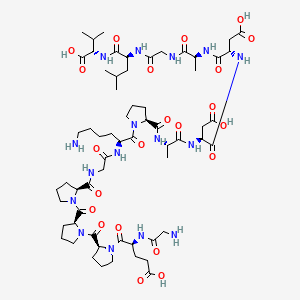
| Reference compound | BPC-157 |
|---|---|
| CAS number | 137525-51-0 |
| Molecular formula | C62H98N16O22 |
| Molecular weight | 1419.5 g/mol |
| Source | PubChem CID 9941957 |
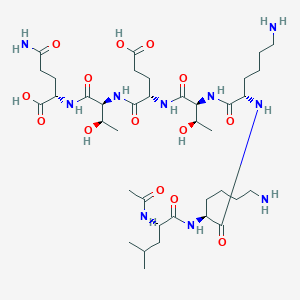
| Reference compound | TB-500 (published acetylated fragment) |
|---|---|
| CAS number | 885340-08-9 |
| Molecular formula | C38H68N10O14 |
| Molecular weight | 889.0 g/mol |
| Source | PubChem CID 62707662 |

Overview
GLOW contains GHK-Cu, BPC-157, and the TB-500 fragment. GHK-Cu is studied for collagen synthesis and MMP-2 expression in fibroblast cultures.[1]
Published research
Each finding on this page is from a study of one ingredient, not from a study of the finished GLOW blend.
GHK-Cu
The copper complex is the constituent examined in the matrix studies. Collagen synthesis measures the production of new protein. MMP-2 and its inhibitors concern the machinery that remodels existing material. These endpoints can change together, so more collagen synthesis in a dish does not reveal the net amount retained in tissue. A study that also included hyaluronic acid tested a different formulation from this blend.
Cell study · Matrix production
GHK-Cu increased collagen synthesis in cultured fibroblasts independently of changes in cell number.[1]
Cell study · Matrix turnover
The researchers found increased MMP-2 and its inhibitors TIMP-1 and TIMP-2, supporting a role for GHK-Cu in matrix remodeling as well as matrix production.[2]
Read the full GHK-Cu overviewBPC-157
The BPC-157 work separates three processes that might otherwise look similar in an explant: cells can move farther, more cells can survive, or cells can become more responsive to another signal. The original experiments used tendon-derived material. Their findings identify properties of BPC-157 in those preparations and provide no direct measurement of how the other ingredients affect those properties.
Cell and explant study · Migration versus survival
In rat tendon explants and fibroblast cultures, BPC-157 increased cell outgrowth, migration and survival during oxidative stress, with migration accompanied by activation of FAK and paxillin.[3]
Cell study · Growth hormone receptor expression
The researchers found more growth hormone receptor RNA and protein after BPC-157 exposure. Adding growth hormone to the pretreated fibroblasts increased proliferation-associated readouts and activated JAK2.[4]
Read the full BPC-157 overviewTB-500
The GLOW formulation contains the acetylated seven-residue fragment. Its shorter breakdown products are chemically distinct, and the distinction mattered in a direct comparison. Measuring activity after a peptide has been exposed to a biological system raises a question about which molecule remained present when the outcome was assessed. The parent-versus-metabolite comparison below addresses that question for the isolated fragment.
Analytical study · Identifying the fragment
The investigators identified the acetylated seven-residue sequence Ac-LKKTETQ in the TB-500 preparation they analyzed.[5]
Cell study · Parent fragment and metabolites
The investigators detected no cytotoxicity from the parent or its tested metabolites under the assay conditions. The parent fragment showed no significant increase in fibroblast gap closure relative to the control, whereas its shorter metabolite Ac-LKKTE produced a small, statistically significant increase.[6]
Read the full TB-500 overviewDosing
Research doses
No published study of the three-part GLOW mixture was found. The component papers are on the GHK-Cu, BPC-157, and TB-500 pages. Those doses are not added together here and are not a dose of the blend.
No sourced study dose was found for GLOW.
Side effects reported in studies
Names below are adverse findings stated in the cited studies, or, when at least 10 independent firsthand reports name them, a count from those reports. They are not a complete list and not guidance for human use.
None named in the studies cited on this page.
Anecdotal / user experience
Reported dose ranges
Insufficient reports from the PeptiRef firsthand sample (fewer than 10).
Commonly cited community protocol — source: Peptide Dosing Protocols (peptidedosingprotocols.com). Accessed 29 November 2026. Source page
| Amount listed | Frequency listed | Duration listed | Route listed |
|---|---|---|---|
| About 2.3 mg of the combined blend | Daily | Not stated on the chart row | Subcutaneous, as listed |
Reported effects
Retrieval on 29 Nov 2026 from the Arctic Shift archive of public r/Peptides submissions (search limit 20–40 posts per compound query). A report was counted only when the text was a firsthand description of something the author had already noticed, the compound was a subject of that description, and the post was not a dosing compilation, a how-to, or a statement of future plans. One post was counted once, on the compound it was about. Posts that only described a blend were not split into ingredient counts. Compilations were excluded. A percentage is shown only when 10 or more reports met those rules.
Insufficient reports.
Commonly self-reported side effects
Insufficient reports. Peptide Dosing Protocols did not list discrete side-effect names for GLOW on the page reviewed.
Frequently asked questions
Which molecules are described in the GLOW research overview?
How does the GLOW reference formulation differ from KLOW?
Have the three GLOW ingredients been tested together in the cited studies?
Why is the copper complex included in discussions of matrix research?
References
- GHK-Cu and collagen synthesis in fibroblast cultures | FEBS Lett, 1988
- GHK-Cu and MMP-2 in fibroblast cultures | Life Sci, 2000
- Tendon-cell migration and survival | J Appl Physiol (1985), 2011
- Growth hormone receptor expression in tendon fibroblasts | Molecules, 2014
- TB-500 fragment identification and metabolism: analytical study | J Chromatogr A, 2012
- TB-500 fragment metabolism and fibroblast assays | J Chromatogr B, 2024